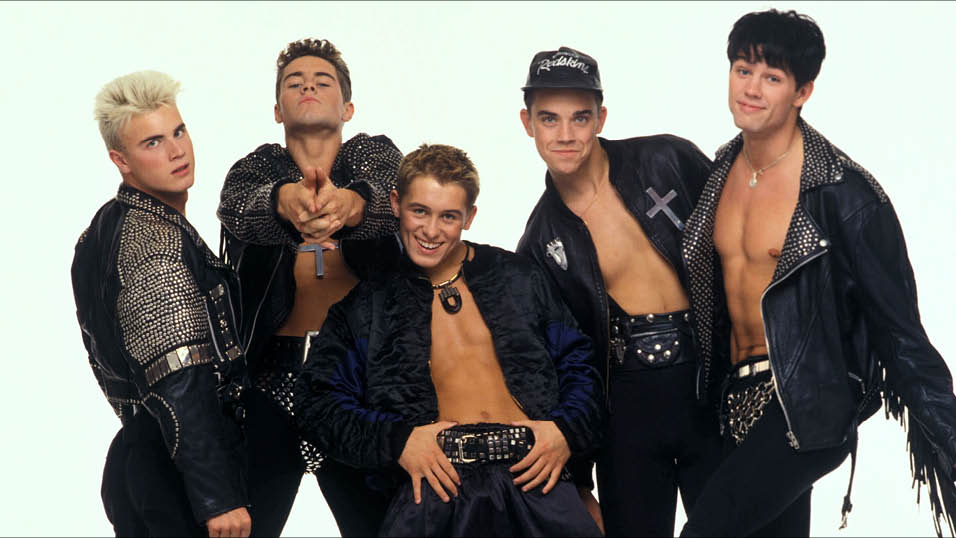
Crafting a documentary about a major music act is both a privilege and a serious responsibility. You’re shaping the definitive version of someone else’s story, which demands sensitivity, trust but also editorial control. From the outset, we established this with Take That between myself, Gabe Turner (exec producer & partner at Fulwell Entertainment) and Alex Emslie (series producer) agreeing that the band would entrust us with their story, alongside our small and dedicated team that dedicated themselves to the project. Viewers today can immediately spot when talent controls the narrative, so securing genuine editorial independence felt really important.

Very early in development, we aligned on an ambition to show audiences what it felt like to be inside the band, rather than simply tell them. The key was an extraordinary personal archive: over 50 hours of unlogged, unseen handicam footage the band had filmed throughout the ’90s. Once the tapes were finally unearthed- literally in a long-forgotten IKEA bag – we watched every frame. Experiencing their world first‑hand unlocked an authentic, vivid portrait of five young men chasing pop stardom, full of joy, ambition and the messiness of fame. This allowed us to build the series from real moments rather than decades‑old recollections.

Because this footage was so rich, it transformed our approach to interviews. Much of the material acted as a trigger for conversations with the band, sparking memories they hadn’t revisited in years. This gave us the confidence to remove on‑camera interviews entirely and rely solely on audio. It’s not regular practice to do a multi-part series with no new on-camera moments but the result was a far more intimate and relaxed dynamic in the room, which turned it into an archive‑led series. This was refreshing, nerve-racking, intriguing and unusual, as mostly in interviews you push for as many cameras as you can so you have great coverage, options in the edit and the ability to keep viewers interested rather than sitting on the same shot for hours at a time. It felt really exciting this time to go in with no cameras at all.
The volume and depth of material also reshaped the structure of the series. What began as a two‑part pitch for Netflix – Birth and Rebirth – quickly expanded to three, simply to do justice to a 35‑year story. More often than not filmmakers search for ways to avoid linear structure when it comes to storytelling but we thought that linear was really the only way to tell this story and so organised the archive accordingly to when it was shot and were very disciplined in using the matching archive to the era/year that we were talking about.

As well as this treasure trove of unseen tapes, after months and months of hunting (and badgering from us) Gary finally found loads of his original song demos which were amazing – many unheard since the ’90s. These became a powerful storytelling device across the series. Hearing early versions of tracks like Pray, Patience and A Million Love Songs offers fans fresh insight into the band’s creative evolution, while underscoring that Take That’s legacy is built on the strength of its songwriting.
Ultimately, our priority at Fulwell was to keep the music at the centre of the storytelling. The combination of intimate archive, unheard demos and a deliberately stripped‑back interview approach enabled us to create a series that feels honest, immersive and genuinely new for the band.
I have to say this project from start to finish was an utter joy. Not just because of the subject, the footage or the music but also because of the excellent collaboration with the band, Netflix and our amazing team.