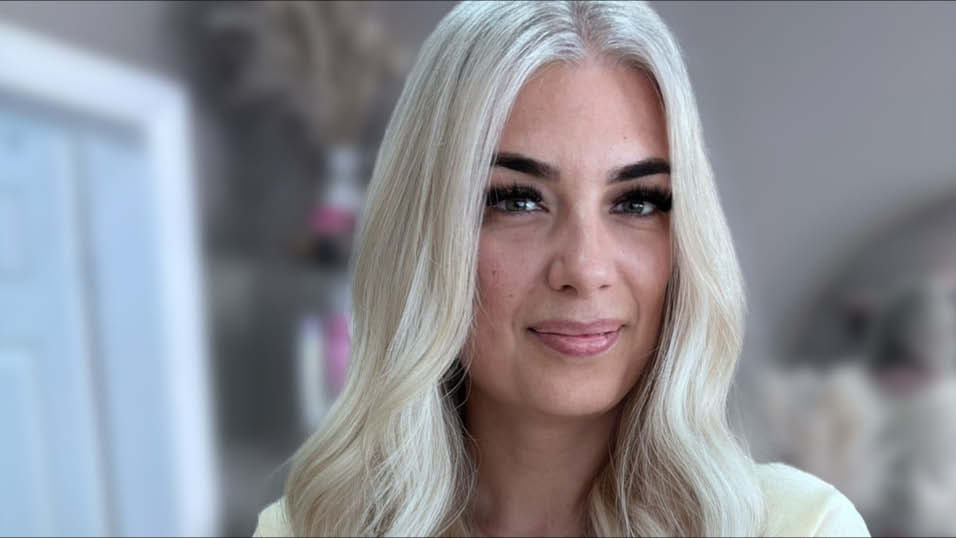
Post Production Supervisor, Chloe Dean (The Grand Tour, Clarkson’s Farm, The Longway series) asks: When familiarity drives hiring: What does it cost the industry?
Television runs on trust and judgement calls made at speed.
Budgets are tight. Teams are stretched. There is very little margin for error. In that environment, hiring someone you already know and trust can feel less like comfort and more like self-preservation.
If something slips, it lands on you.
If a delivery goes wrong, you answer for it.
So of course, familiarity feels safer, sometimes it genuinely is. Any honest conversation about hiring in television has to begin there.
And yet, alongside that reality, I find myself wondering something else. Within all these constraints, are there still moments where we have more choice than we think? Not sweeping, idealistic change. Just small, everyday decisions that shape who gets seen and who does not.
The habit we rarely question
Most of us build our careers through relationships. We learn who we can rely on. We develop shorthand. We remember who stayed calm when everything else was on fire. That trust is valuable and earned.
The issue is not that we hire people we know. The issue is what happens when that becomes the dominant hiring mechanism across the industry.
The same names circulate. The same people get called first. Networks reinforce themselves, not because anyone intends to exclude others, but because when time is short and risk feels high, defaulting to the familiar is the easiest option.
Over time, that habit shapes who gets opportunity and who does not
Access versus ability
We talk a lot about skills shortages and talent pipelines, but I am not convinced the problem is always talent. Often, I think the issue is access.
Not everyone has equal entry into the informal systems where trust is built. Some people struggle in traditional networking spaces. Some are neurodivergent or disabled. Some come from working-class backgrounds. Some have caring responsibilities that make unpaid work or prolonged insecurity impossible. Some are simply quieter.
None of these things reflect competence.
Yet when hiring relies heavily on familiarity, these are often the people who remain unseen.
It raises an uncomfortable question: how many capable people are not progressing, not because they lack ability, but because they lack proximity?
The creative cost
Some of the strongest contributors I have worked with arrived through unconventional routes. They did not always know the unspoken rules. They asked different questions. They noticed different things. They approached problems in ways that disrupted habits rather than reinforcing them.
A few years ago, I recommended someone for a role who had never worked on a high-profile series before. It felt like a risk. They were quieter than most and did not naturally “sell themselves” in the way the industry often expects. But their thinking was exceptional. They went on to become one of the strongest people on that team, not despite being overlooked previously, but because the industry had simply never made space for someone like them.
They were also often the person in the room asking the slightly awkward question everyone else had stopped asking. And quite often, they were right.
Many people like them only get their opportunity because someone makes a small, conscious decision to look beyond the familiar.
It makes me wonder whether, at a time when the industry is already under creative and economic pressure, we can really afford to filter out difference quite so efficiently.
Pressure and responsibility
Most hiring decisions are made with care. Heads of department, producers and execs are often carrying significant responsibility. The risk sits with them. People are doing their best to protect projects, teams and reputations.
This is not about blame. It is about awareness.
Sometimes familiarity is genuinely the right choice.
But sometimes it is simply the least risky.
The question is not whether we should stop hiring people we know. It is whether we are always sure we are choosing the best person, or whether we are sometimes choosing the safest option by default.
That difference matters.
Where change lives
The encouraging part is that this does not require a policy document or a strategy deck. It lives in small, everyday moments.
A recommendation that says, “They have not done this role before, but I believe they are ready.”
An interview offered to someone without the perfect credit list but with clear potential.
A willingness to build a little mentoring into a team rather than only hiring people who already appear fully formed.
These are not grand gestures. But they compound. They widen the circle. They shape who progresses and who stalls.
A longer view
The industry is already grappling with burnout, retention issues and a fragile pipeline. We talk often about sustainability, but rarely in relation to hiring culture.
I know many people are thinking, there is barely enough work to go around as it is. But that scarcity is precisely why these choices matter, because they shape who stays, who leaves, and who never gets a foothold at all.
Relying increasingly on narrow, familiar networks may solve short-term delivery problems, but it does not necessarily build long-term resilience.
Most of us are here because, at some point, someone took a chance on us. Someone gave us our first opportunity. Someone vouched for us when we were still unproven. Someone opened a door that did not have to be opened.
It is worth asking who that person was for us.
And perhaps the more important question is this: how often do we choose to be that person for someone else?
The future of television will not be defined only by those who already have access to it. It will be defined by who we choose to bring in, back, and believe in next.
Perhaps the simplest place to start is by noticing our own habits, and by asking, occasionally and honestly, whether we are choosing what feels safest, or what might be most meaningful for the industry we say we care about.
Chloe Dean is a fully independent Post-Production Supervisor with over 15 years of industry experience. Chloe delivered the first ever 4K HDR Fact Ent programme and continues to be at the forefront of evolving post technology. Recent career highlights include creating workflows for the past four seasons of ‘The Grand Tour’ and the forthcoming ‘Clarkson’s Farm’ for Amazon Prime and ‘The Longway’ series for Apple TV. She is able to draw on her vast expertise and the challenges she’s met on these and other high-profile projects to help make technology accessible to creative teams.
Jon Creamer
Share this story