Garden Studios has launched its “most advanced” Virtual Production (VP) Stage.
The new LED volume represents a significant investment in next-generation production infrastructure, designed to support the growing adoption of virtual production across film and high-end television.
Since launching its first virtual production stage in 2021, Garden Studios has delivered more than 150 projects spanning commercials, documentaries, high-end television drama and feature films. The new stage has been developed following five years of intensive production use, with a focus on “reducing on-set friction, improving efficiency and addressing common technical challenges encountered by productions.”
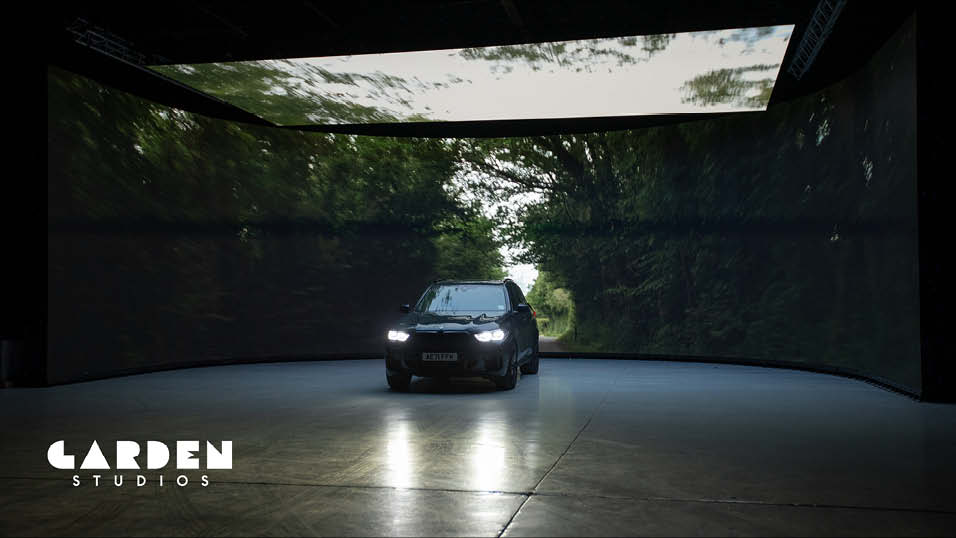
A key driver for the new facility has been the increased use of virtual production for driving process work. The stage has been designed to accommodate a wide range of vehicles, from cars and motorcycles to large stunt vehicles, buses and specialist transport, allowing productions to bring complex sequences into a controlled studio environment.
CEO and Founder, Thomas Hoegh, said: “Garden Studios chose to launch five years ago with a VP stage, even before the rest of our campus was ready for production. We have always felt strongly that using various technologies as tools for efficiency and creative opportunity, all productions should consider. Today, we are proud to present our team’s considerable experience with a VP stage worthy of our clients’ ambitions. We also confidently offer co-investment programs for feature films and put our experience into the creative team’s ambitions.”
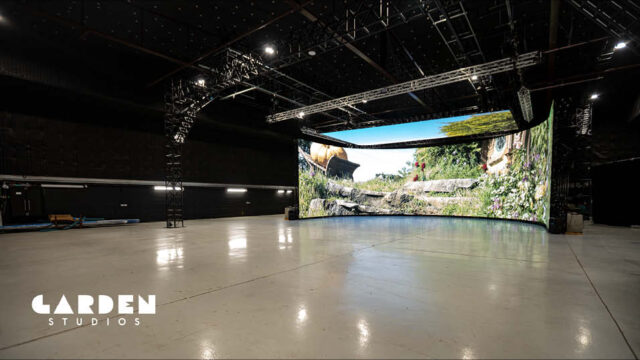
Central to the upgrade is a fully motorised LED ceiling featuring a 2.6mm pixel pitch panel from Absen, prioritising resolution and black levels to deliver clean, realistic reflections on windscreens and bodywork. The ceiling can tilt up to 90 degrees to operate as a front LED wall, creating a full 360-degree volume, and can travel up to 18 metres front to back, allowing rapid reconfiguration from a fully enclosed ceiling to a rain-ready setup. The ceiling area has also been doubled compared to the previous stage.
The stage layout reduces vehicle repositioning, with approximately 90% of camera angles achievable using a single 180-degree rotation, significantly reducing downtime between setups.
Garden Studio’s VP Supervisor, Sam Kemp, observes: “Lighting integration is key to selling simulated travel on a volume. The new stage provides a bespoke image-based lighting workflow that plugs into existing control desks. This allows Garden to replicate a wide range of lighting states, from inner-city neon night to hard sunlight on a winding country lane.”
Garden Studios’ Lily Stage configuration includes independently controlled lighting trusses, mounted on a system of rails and motors, allowing fixtures to be positioned above, around and even beneath the LED ceiling. All systems are pre-wired for power and data, enabling fast and efficient rigging.
Additional features of the stage include integrated Pomfort Livegrade Studio, supporting intuitive colour control with an interface that Directors of Photography and Digital Imaging Technicians understand and end-to-end pipeline calibration, including OpenVPCal.
Bee Devine, Chief Operating Officer, said: “This new stage reflects how virtual production is being adopted across film and high-end television. By investing in infrastructure that responds directly to production needs, we’re able to offer clients greater efficiency, reduced risk and more creative control.”
While optimised for driving process work, the stage supports a wide range of Unreal Engine-based real-time workflows. Clients have access to in-house 3D technical art support, alongside the flexibility to work with external partners.
Jon Creamer
Share this story