Director Rob Sixsmith helmed the latest Netflix true crime documentary from Asia, General Mayhem: The Killing of Brigadier J, a British/ Singapore production from Fremantle’s Beach House Pictures.
The documentary follows in the footsteps of other Netflix true crime productions in Asia that are inextricably connected with the bigger regional stories and present a different scale of challenge.
As a British director, it’s an odd situation to find myself embroiled in the politics of another country. As a team, we believe the production should never become the story. But after six-odd true crime productions across Asia, Beach House Pictures has a habit of ending up in the headlines of the countries where it produces.
So, when the BBC reported that luxury villas had been found during a surprise raid on Cibinong prison, where General Ferdy Sambo is serving a life sentence, people across Indonesia started pointing fingers at references to that prison in our film, General Mayhem: The Killing of Brigadier J, which had just launched on Netflix.
Sambo, head of the police’s powerful internal affairs division, was convicted of murdering his bodyguard in 2022 and of orchestrating the vast nationwide cover-up that followed.
In 2023 Beach House produced Indonesia’s first Netflix true crime documentary. Ice Cold: Murder, Coffee and Jessica Wongso covered what people openly called Indonesia’s ‘trial of the century’ and went on, in the words of one data analyst, to ‘break the Netflix algorithm.’
For months it was one of the country’s main talking points, even getting a nod during the presidential race. Many credited it with prompting a re-evaluation of the guilt of the woman at its heart, serving a 20-year sentence for poisoning her best friend with a cyanide-laced coffee.
I still believe we could only make that film because as a British/Singaporean team, with British talent at pretty much every level (Beach House is led by one British md and the other educated in the UK), we were seen as separate from local politics, free of bias or political leanings.
And as we were delivering that film, inevitably Indonesia’s next ‘trial of the century’ thundered along: the death of a young police officer in the home of the country’s head of internal affairs. It was already an extraordinary story, and because Sambo was one of the police investigators cited in Ice Cold, we slipped in a few barely noticeable easter eggs hinting we’d like to tackle that story next.
The audience noticed and started openly calling for a film on Ferdy Sambo. As a UK director, I find there’s something special about getting to know audiences around the world, and Indonesia’s Netflix audience memes everything with a wizened sarcasm and irony that anyone from Britain would recognise. So, the impetus for General Mayhem largely came from the audience themselves.
Little did we know how bumpy the journey would be.
Some moments stand out. Pacing a hotel room for a week waiting for one of the main contributors to make contact. Vaguely coded text messages back and forth, influential middlemen popping up and disappearing, and most evenings spent checking the hotel corridors in case their friends were waiting to raid the room.
General Mayhem was never going to come easily. Ice Cold was a breeze in comparison. Yes, there was the odd threat, and an attempt or two to dox members of the team. Otherwise, plain sailing, because this time the subject wasn’t Indonesia’s judiciary but its police.
Topics this big and this dangerous mean that doing true crime in Asia is, in and of itself, a controversial act. Roughly 80% of contributors refused to be interviewed, fearing potential reprisals. Even those who agreed often got cold feet and asked us to remove their footage. It only got worse when people near to the story posted legal warnings to anyone who took part. We lost local team members, archive, actuality.
It’s always galling to shoot so much material that will never see the light of day. Powerful people were dead set on General Mayhem never being made. Even broadcasters pulled archive clips right up until the last moment for fear of being sued. Over the year, huge holes opened up in the edit.
The true crime pioneers taught us to build stories on investigative pillars and police procedure. But it’s hard to tick those boxes when contributors and archive houses keep pulling out.
Fortunately, we found brave individuals. Indonesia has no shortage of people individuals desperate to make their country better. More than 280 million people, a young, eager and innovative population, 700 languages, improbable levels of diversity and a resource richness that makes it the envy of Asia. Yet it is constantly hamstrung by broken systems. The journalists and investigators who became the narrators of General Mayhem were among the few willing to talk about this case and what it meant for the country, despite the risks. Their emotional investment is what pulls this complex story together, and their shock at the scale of the cover-up is palpable.
Without the usual arsenal of true crime tools, we had to lean on drama reconstruction more than we’d naturally feel comfortable with. But it did let us toy with some of our favourite references: split diopters when filming the heroic journalists of Tempo magazine (a nod to All the President’s Men), plus plenty of Dutch angles, off-framing and old-school maze graphics to give the film an almost noirish touch.
As a team we learnt a lot about working with the rug constantly being pulled from under us, and that documentary-making is often the art of compromise. But if the reaction to the Cibinong prison raid is anything to go by, it is clear that the audience is watching and expects our true crime to make a statement, have an opinion and make a difference.
Because, as General Mayhem shows, true crime stories in Asia really are that important. This is not just the UK/Asia crossover stories like Missing: The Lucie Blackman Case (also for Netflix) but generally the largely untapped vein of celebrity, death, injustice and corruption stories. Even if getting those films made is often risky and difficult.
Production pic credit: Netflix
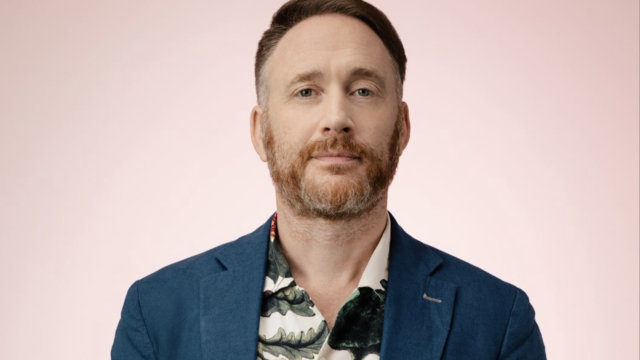
Rob Sixsmith
Pippa Considine
Share this story