Late last year, Televisual published its Drama Genre Report taking the temperature of the UK scripted market. Here we publish extended interviews with the drama commissioners at the BBC, ITV, Channel 4, 5 and UKTV on what has worked well for them and what they need for the future from producers.
Lindsay Salt – BBC
Lindsay Salt is director of BBC Drama. She talked with Televisual for its annual drama report.
Earlier this year, we were thrilled to see how This City is Ours connected with audiences across the UK. Stephen Butchard’s series exemplified the best of what BBC drama has to offer, with such specificity of place, complex character writing, breakout performances, and exceptional direction.
We’re lucky to have worked again this year with Sally Wainwright on her latest series, Riot Women. In her inimitable way, Sally created a show that spoke deeply to viewers who saw themselves reflected in that core group of women whilst leaving plenty of chairs at the table for everyone else. It was an unflinching, emotionally expansive, prescient and joyful piece of ensemble storytelling and we’re very excited to be underway on a second instalment.
Now into its third series, Blue Lights continues to go from strength to strength. A police procedural that manages to deliver razor sharp plotting alongside unforgettable characters is no small feat, but the show’s creators Adam Patterson and Declan Lawn, somehow manage to deepen and reinvent with each successive series.
And I have to give a shoutout to What It Feels Like for a Girl. It’s a great demonstration of how backing new talent can result in innovative, timely drama whilst launching stars of the future.
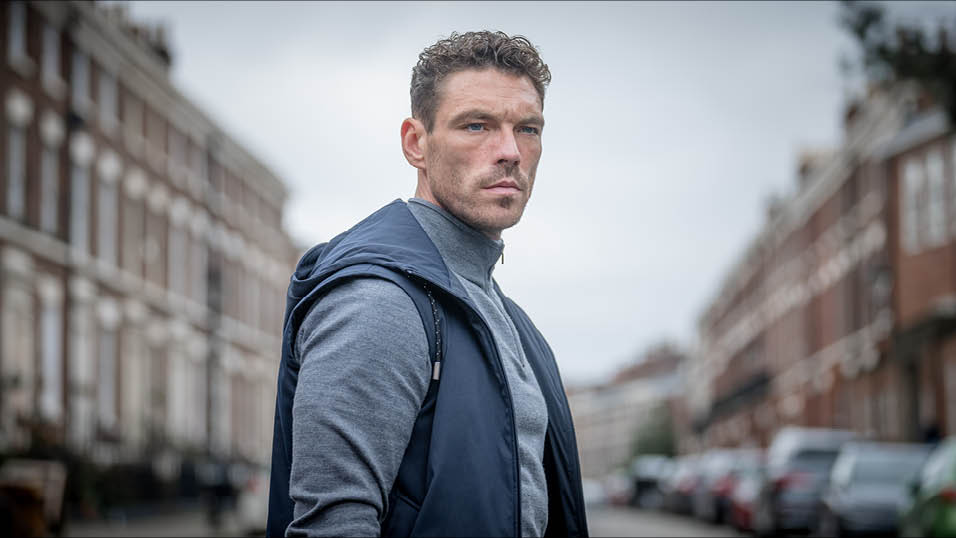
This City is Ours
Some of the highlights coming up
2026 is shaping up to be a fantastic year for BBC Drama. Amongst the many shows we’re excited about, we have
Richard Gadd’s Half Man, which promises to be exactly the kind of unmissable, distinctively authored, captivating drama we’re always seeking to deliver for our audience.
After the play’s success, James Graham’s adaptation of Dear England will hit our screens in a World Cup year – an inventive, heartfelt and ambitious take on factual, state of the nation drama.
Elsewhere, the long-anticipated return of The Night Manager will showcase our ongoing appetite for prestige, stylish, mainstream drama, whilst Charlotte Regan’s Mint underscores our commitment to backing visionary British talent.
With classic adaptations like Lord of the Flies, emotional journeys like Babies and The Other Bennet Sister, absorbing worlds including The Cage, The Split Up and Boarders, and many more besides, there’s lots to look forward to from BBC Drama in the year ahead.
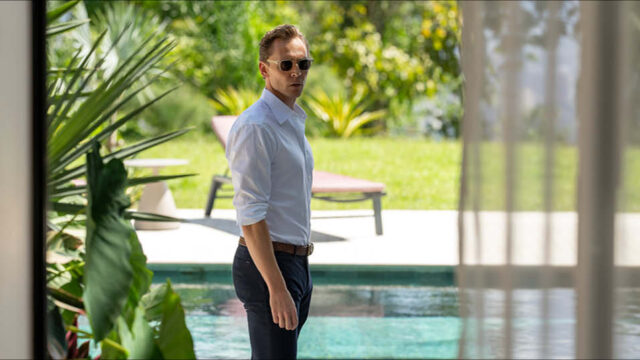
The Night Manager S2
What next for BBC drama?
At the moment, we’re quite well covered across espionage, gang / organised crime, legal, medical, domestic thrillers, romance, and period classics.
Looking ahead, we’d like to find a new addition to the iconic BBC crime and detective shows from recent years. Where the likes of Happy Valley, Luther, and Life on Mars brought a fresh and distinctive spin on their genre, we’re similarly looking for brave, ambitious ideas that could add a new definition to crime and detective storytelling.
Our commitment also continues to finding authored, resonant stories that tackle the shared and urgent themes that underscore our times, in the vein of I May Destroy You, This Is Going To Hurt, and What It Feels Like for a Girl. In the thriller space, we’re looking for visceral, sharp concepts like The Capture, and invitations to fascinating, rich worlds we don’t often get to see, such as Conclave which did so well in the feature film space.
More recently, we’ve been looking at what the BBC’s take might be on elevated-yet-grounded genre shows like Severance and Pluribus.
Polly Hill – ITV
Polly Hill is head of drama at ITV. She spoke with Televisual for its annual drama report.
“ITV is all about getting the biggest audiences we can, and we are unashamedly celebrating mainstream storytelling,” says Hill. “We’ve had a lot of shows that have done that… while there are a lot of challenges in our industry, we are still able to cut through and find those big audiences.”
What’s worked well in the last year
Shows that have performed particularly well in 2025 include Protection, Playing Nice, Code of Silence, and I Fought the Law. Returning hits such as Unforgotten and Trigger Point also performed strongly.
There has been significant pressure to replicate the success of 2024’s Mr. Bates v The Post Office. “I have released myself from having to try and replicate Mr. Bates,” she says. “That was in a long journey of telling true stories, which I’ve always felt is an important part of what ITV does… We do two things: give you stories you want to watch for entertainment, and give you stories everybody should know about…. I don’t think we’re going to achieve what we achieved with Mr. Bates ever again. It was once in a lifetime.”
“Audiences come to us for a very particular thing,” says Hill. “My job is to deliver those stories, a lot of which are in the broad crime genre… while also future-proofing ITV by exploring what they might be looking for elsewhere.”
Sister’s six parter Coldwater falls into the latter category. “We deliberately commissioned Coldwater to do something new and different… and it really felt like it cut through. It might not have had as big an audience as the others, but it definitely got a bigger, younger audience.” As did Joan, made by Snowed-In Productions. “It felt like it was reaching a slightly different audience…I’m really sad it’s not coming back.
“We look for ways to refresh crime storytelling… to stretch what audiences might expect from ITV while delivering big hits.” Code of Silence features a deaf protagonist. Actress Rose Ayling-Ellis is a familiar face, but in a lead role.
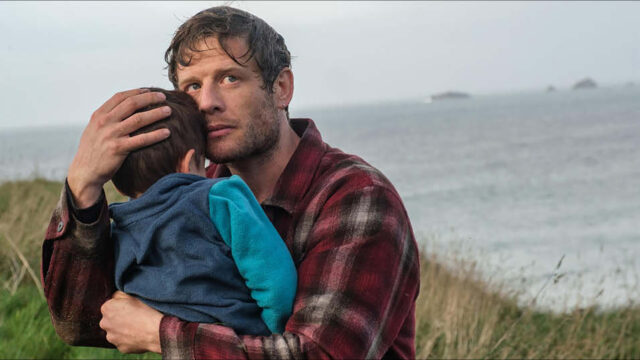
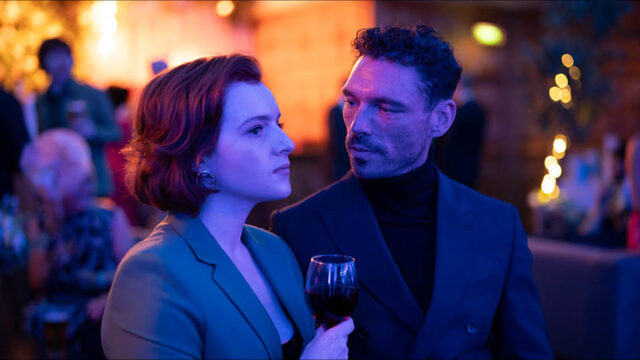
Playing Nice
Coming up in 2026
“Our biggest returning shows next year include Red Eye and Unforgotten, but we’ve also got new thrillers… We’ve got a great show with Gemma Arterton, Secret Service, based on the book by Tom Bradby. It’s a lovely look at what would happen if Russia had a spy at the heart of politics in this country.” The series is partly set and shot in Malta.
Betrayal, with Sean Evans, is a four-part spy story. It’s a more personal take, focused on Evans’ character trying to save his marriage and career.”
True stories remain central to ITV’s slate. The Lady is a four-parter from Left Bank about former royal dresser Jane Andrews. While Jeff Pope’s Believe Me highlight women’s experiences in the John Warboys’ case, where they were not believed by the Met police.
Later in the year will see the launch of The Blame with Michelle Keegan. Made by Quay Street, “a twisty, turny story which looks at misogyny in the police in a slightly different way.” Adultery with Dominic Cooper: “it’s lovely to have a show that isn’t crime.”
“Audiences are story hungry,” she notes. “They want compelling characters, but first they come for a story that makes them stop and watch.”
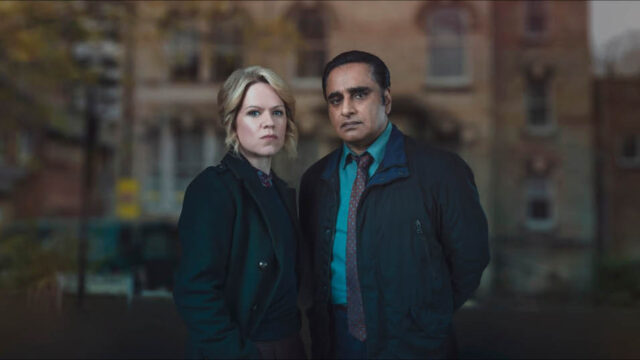
Unforgotten
Three years into ITVX
The ITV drama commissioning strategy has been revised since the launch of ITVX. “We thought that there might be an opportunity to have an ITVX strategy on its own and, in doing ITVX on its own, we could offer an audience something very different to what they want and expect from us on ITV one,” she notes. But it meant that the audience was split, “you never got that moment of thinking, oh my god everyone’s watching it together.”
Mainstream had to come firmly back in focus. “We’ve gone into a slightly different shape. Everything needs to exist on both platforms together.” Most people watch on ITVX, and the audience generally gathers momentum in the first couple of weekends, often the first weekend, “so shows need to be box-settable.”
Funding, co-productions, and four-part dramas
Budget constraints affect commissioning. ITV has consistently made shows at £2 million an hour… Occasionally they go above £3 million if co-production funding allows it, but that’s not often. “I think we all have to accept that it has never been harder.”
“The biggest challenge.. .sits in those very British stories.” These are often best made as four-parters, which are hard to sell. “There’s no getting away from the fact that they are in danger.” Many are struggling to get funded. She makes a plea to anyone in government who might influence the extension of the tax credits. “It’s really important that we continue to make them.”
Helping in any way she can with co-productions and partnerships has become a standard part of her role. “I do whatever is necessary that the producer asks me to do…I’m here to help make the show happen….It’s just being aware that we’re having to sell these shows now to more than one audience and making sure they work for everyone.”
Shared premieres can work if the deal is right. ITV’s new deal with Disney + to showcase highlights from each other’s back catalogue demonstrates an increased willingness to be flexible about sharing rights. Netflix also carries some of ITV best previous dramas.
Independent producers are central to ITV’s output. “I do not commission cynically,” she says. “I commission what I think is right… Our biggest shows, like Protection and Playing Nice, were not from ITV Studios. We just want the best stories, wherever they come from.
“Small entities, new writers, new directors, my door is always open. First and foremost it’s about finding the right idea for us….We want to represent everybody in this country by telling stories by everyone and everybody’s story.”
Gwawr Lloyd – Channel 4
Gwawr Lloyd is interim head of drama, Channel 4. She spoke with Televisual for its annual drama report.
What has worked well in the last year?
Lloyd picks British Belgian detective drama Patience from Eagle Eye and Belgium’s Happy Duck Films, “a police procedural but with a really original and interesting female character, which has absolutely grabbed the audience’s attention.” For Channel 4, the six parter was “proof that we can lean into popular, often-seen and enjoyed genres, but do our own thing with it.”
From there, the year moved into something “completely different… the Brian and Maggie piece.” The two parter from Baby Cow was “a big hit.” It stars Harriet Walter as Margaret Thatcher being interviewed by Steve Coogan as Brian Walden, in the former Prime Minister’s final interview, in 1989. Lloyd describes it as being “in Channel 4 territory, exploring a really interesting moment or interview in time and using it to explore the art of the political interview….We knew exactly why we were making it… how politics is changing and the way politicians are communicating with their audiences.”
And then love story Trespasses from Wildgaze Films, set against the backdrop of The Troubles. “It’s just a stunning piece of work…set against a really challenging moment in time, not shying away from any of that, not just using that as a backdrop.” It’s seen through the eyes of a schoolteacher, “a very female way into a part of history that is quite often seen through a male lens.” Audiences have “really responded to this really intense four-parter…They get that hit of a love story…, but also discover something in depth about that period.”

Patience
What’s coming up
Looking ahead, Lloyd begins by talking about Two Brothers’ six-part psychological thriller Maya, created by and starring Daisy Haggard. She cites it as an example of a good Channel 4 sweet spot, being a thriller, “a really popular genre, with explosions, car chases and everything….But at its heart it’s looking at a really delicate, beautiful relationship between a mother and a daughter in the shadow of domestic abuse.” With a focus on witness protection and policing, it also features workplace drama. “It’s really witty, and it’s really emotional… delivering on that really great watch for an audience, but you will absolutely have food for thought for days, if not weeks afterwards.”
Next is a remake with a Channel 4 heritage: Barbara Taylor Bradford’s novel A Woman of Substance was Channel 4’s biggest drama when first adapted for the channel in 1984 ; and is being remade in eight parts by The Forge. Brenda Blethyn plays the older heroine Emma, wih Jessica Reynolds playing the younger Emma. “Why remake it now?” Lloyd poses the question to herself. “There are some super relevant themes… making it as a single woman, smashing the glass ceiling, looking at working class and the snobbery and the differences in lifestyle…It’s so relevant, but it’s also super, super entertaining.” She reckons this will chime with audiences who enjoyed Disney + adaptation Rivals, delivering on romance and treachery, as well as more thoughtful moments.
The Couple Next Door, The Undeclared War and Patience are all returning to the Channel.
Then there is six-parter Pierre from The Lighthouse, about a duty solicitor, with David Harewood in the lead, written by Roy Williams and John Donnelly. “It’s pointing the camera towards a person who in a police interview room will say just say no comment, you never from him again – but with this show, we go home with him and find out what life is like for a duty solicitor.” But the heart is thematic: “overall it is looking at police brutality and racism.”
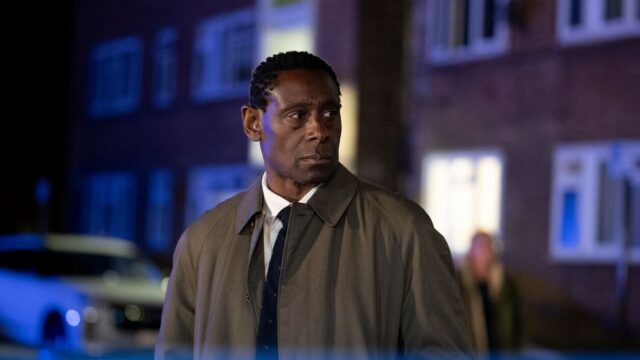
Pierre
What is C4 looking for?
Channel 4 is still growing its drama slate as it focuses on its streaming operation.” The more hours of drama the better,” says Lloyd. “All our shows need to feel like they can grab the biggest audience… whilst also delivering on representing the whole of the UK.”
The types of stories they need reflect that ambition: “Iconic characters… one clear lead character… an opportunity for an actor to have an excellent role,” and crucially, “help us achieve returning drama, because you’re invested in that character and you want to come back time and time again.”
Young audiences are central, too. She cites recently wrapped Major Players, a 6 x 30 show from A24, written by Molly Manning Walker, about a women’s football team. : “Younger audiences leaning into volume more than anything.” Another reason to be looking for returners,
On length and structure, she is pragmatic: “Our mainstay is 6 x 60.” The channel knows that this helps with distribution deals. But it’s open to different shapes, as long as they can find funding to complete the budget.
With Channel 4’s new strategy to create its own in-house production group making indies nervous, Lloyd reassures that she’s still open to ideas from small, as well as big production companies. “We’re really keen to support a broad range of indies.”
Channel 4’s financial contribution has a clear structure, putting in anything between £500k and a million per hour.
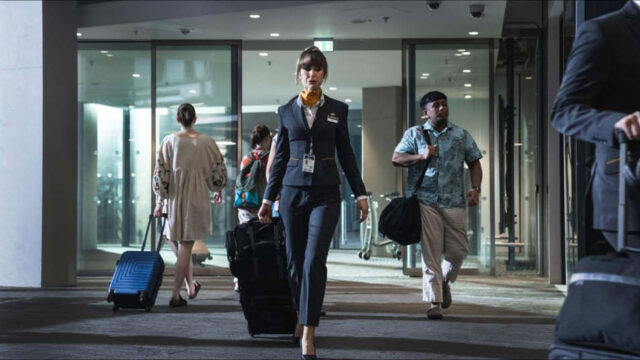
The pre-buy team, led by Polly Scates, head of acquisitions, will also invest, topping up budgets from more international, commercial projects that come through their doors. This year they were responsible for bringing Buccaneer’s crime drama In Flight which did well for Channel 4 .
“Everything we do must have Britishness.” The challenge is “finding that sweet spot,” looking for more commercial ideas, following the strategy of driving an audience, while still holding dear the remit.
“One of the biggest challenges facing independent producers is securing sufficient funding to create high-end quality drama out of the UK. We are committed to telling original stories and don’t want financial constraints to limit the scope or authenticity of ideas that are pitched to us. British storytelling is central to our remit and we will always aim to uphold that standard.”
And what shows does she admire on other channels? “I would love to have made Adolescence, that’s a given, it’s such an important show.” But one other title stands out for her: “I’d have to say Rivals. The way they did it, it had a Channel 4 cheeky tone to it and it was really challenging, it was quite edgy.”
In Flight
Sebastian Cardwell – Paramount UK
Sebastian Cardwell is head of Drama & deputy chief content officer at Paramount UK. He spoke with Televisual for its annual drama report.
Channel 5’s drama slate continues to expand. In 2026 the plan is to deliver 120 hours, with ambitions to increase to 135 in 2027. The percentage of the total C5 budget going to drama will continue to increase.
What has worked well for Channel 5?
Cardwell highlights The Feud as a standout success, which also gained traction on Netflix after its initial outing on 5: “It did incredibly well…An amazing ensemble, lots of fun. Hopefully we’ll do a season two. We’re talking to all the parties at the moment… We see that as a returning anthology series.”

The Feud
Cardwell cites other successes, such as four-part thriller The Game, which explores the cat-and-mouse battle between its two leads, Jason Watkins and Robson Green. “We see that as a three season story.” The Clapperboard title is set to return. Serialised crime drama Murder Before Evensong was another success.
Play for Today, the rebooted anthology feature series with a social conscience, launched with a fanfare in November. Releasing one ‘play’ at a time, the first – Never Too Late – reached over a million views within two weeks. The four feature-length dramas are produced by LA Productions and Vertigo TV, with the crew drawn from lower income backgrounds. “We weren’t sure it would do well. We were doing it for more altruistic reasons. Helping people get their credits, promoting people from low-income backgrounds, because it’s so difficult to get into TV.”
Referring to it as a scheme, six more Play for Today films are in production. They need to succeed commercially. The strategy? “Take the audience by the hand, introduce them to the rebooted Play for Today, and then when they feel comfortable with it, we’ll push into different areas that maybe they wouldn’t expect from us.”
Funding and producing on a lower budget model
The budget for Play for Today is £350k an hour. “The budget is very small, but it’s no different to our tariff we would apply to other shows.” The tariff for Channel Five varies anywhere from £200,000 pounds an hour up to £350,000. The total budget will depend on other forms of financing, including tax credit, distribution advance, regional funds, platform co-production partners. “Effective use of the budget matters.” Cardwell stresses efficiency and creativity. “Do you really need to tell your story on a canvas that costs so much money? Or is there a creative way to tell the same story for less money, with the same resonance and emotional impact?”
On talent costs, he acknowledges industry pressures: “Big Hollywood money comes in, streaming money comes in, tech money… prices go up. But if the shows don’t turn a profit, and you’re operating in a declining ad market… maybe things have got too expensive. You’ve got to find a way to reduce it through creativity.” Low-budget drama, he argues, can deliver strong emotional impact. Play for Today is a prime example: “It’s a very low budget thing, but it packs an emotional punch.”
Channel 5’s government relations team has been lobbying for an extension of tax credits to apply to shows made for less than the current bracket. He argues even lower than one to three million an hour. The lack of credits is driving shows to be shot abroad, taking business away from the UK. And this, at a time when continuing drama is declining and reducing the places for new talent to develop skills and get early credits.
He’s critical of some agents who “need to lower their prices for a start….They’re still operating as if we’re living in the boom time of drama, during the Golden Age of streaming.” He argues that the boom ceased over two years ago. Cardwell is not alone in observing that the continued pressure on producers to pay inflated rates could well be undermining the industry.
On the plus side, he says “there’s more financing partners out there than ever before. ’’I’m approached by new players every day….If you’re open minded and out there and willing to knock and doors, you can set these shows up.”
“We’re great partners. Let’s invest in our model, which has lower risk because budgets aren’t as crazy expensive… mitigate risk. People have responded to that. We’ve been out there commissioning shows, green-lighting scripts, developing things with a view to mopping up the money that’s around.”

What’s coming up?
Looking ahead, Cardwell previews a range of upcoming projects. “Next year, Number One Fan is looking really good.” The four part thriller, another from Clapperboard, stars Sally Lindsay and Jill Halfpenny and is set in the world of daytime TV.
“We’re trying to find mystery thrillers that are slightly richer, not always in a domestic/home environment. Teacher 3 is provocative, thorny… Victoria Hamilton’s great. The Family Secret (w/t) is looking really rich.
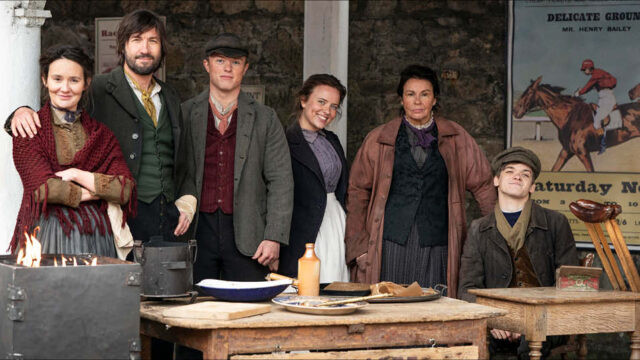
The Hardacres, from Playground, returns. It has been a big hit for the channel.
The Hardacres
“We will announce our first comedy drama in the new year. We’ve hopefully got two more following it.” He’s recently visited the set in Benidorm for John Hannah’s comedy murder mystery show, Death in Benidorm (w/t).
“I want people to be entertained, and we’ve got some more serious pieces as well…In the next couple of years we’re trying to bring through really rich characters our audience can relate to.
“We’re shifting a little bit into comedy drama space. We will probably invest in bigger, richer character-driven precinct shows. Shows that viewers of Hardacres and All Creatures might move across to.
“We’ve got an IP play we’re close to rebooting, a very big show. That would be amazing. Hopefully we will have news of that early next year.”
Red Flag is a project based on real events: a stalking show centred on UK crime stats – every four days, a woman is murdered by a partner or ex-partner.
Cardwell remains committed to serialised crime drama. He’s got two in late-stage development. “Let’s try to build a serialised crime show that can return for three years, with a much more nuanced dynamic at the heart of the mystery.”
There are two adaptations by big-name book writers will be announced in due course.
“Six years ago we started with two shows… now we’re probably right up there with competitors.”
When it comes to incoming submissions, Cardwell is selective: “I’m less interested in people pitching ideas — I can do that myself. I’m more interested in how you’re going to set this show up, your philosophy, your company vibe… solve problems for us. Using new technologies, find ways to make shows bigger, better, more impressive, but mitigate cost.” Cardwell would surely be interested in understanding how AI can help with production efficiencies.
He stresses that Channel 5 is now a trusted destination for drama: “Audiences trust us… we can be bolder with types of shows we put on. Hence, comedy drama… maybe a show you wouldn’t expect to be on Channel Five, maybe we’ll take a risk in that direction.”
Finally, he remains pragmatic yet optimistic about the industry’s future: “It’s a really depressing time out there, but there’s a lot of opportunity. Scaling up the number of hours means more work… it’s doable if everyone thinks differently. Carry on making stuff the old way, and you’ll probably do fewer shows a year.”
Helen Perry – UKTV
Helen Perry is head of drama at UKTV. She spoke with Televisual for its annual drama report.
At the end of her second year in the role and after year that included the reboot of Bergerac from BlackLight TV, Mark Gatiss’ Bookish and the debut of Mitford sisters drama Outrageous, from Firebird Pictures, Helen Perry reflects on how the broadcaster is evolving its drama slate and what kinds of stories she’s looking for next.
“The blessing is that UKTV has such ambition to make a mark in drama,” says Perry. “It’s been an absolute gift to go straight out of the gate with big, noisy commissions.”
The mission is not just to satisfy loyal linear audiences but to broaden UKTV’s reach as it becomes increasingly digital-first. “We’re constantly thinking about how we stretch, where we reach new audiences, and how we can expand the breadth of our dramatic offering,” she says. “It’s about finding space in the ecosystem that other broadcasters aren’t occupying.”
Perry is clear that not every show needs to land in the same way. “Some have landed really well critically, some through ratings, and some reputationally,” she explains. Outrageous, for instance, delivered a standout cultural moment. “We had Bessie Carter on the cover of Tatler” and a surge of interest from industry peers. Meanwhile, the recommission of Bergerac is a more classic, ratings-driven highlight.
“We’re testing, learning and seeing what lands,” she says. “There are lots of different kinds of wins.”
Most recently Bookish, from Mark Gatiss and produced by Eagle Eye, which has already been recommissioned.

Bergerac
What UKTV wants next
One of Perry’s strongest calls to producers is for drama that brings joy. “There’s a real lack of joy,” she says. “Cosy crime has played really well, but I don’t think that’s the only type of show that can offer escapism and hope.”
She’s open to procedural-adjacent formats – legal, medical, workplace, romance-driven – so long as they have “a propulsive motor” and “character-led storytelling that leaves you feeling lighter.”
And crucially: “I’d like more shows that don’t have dead bodies at all.”
When pressed for shows that she admires, Perry cites Rivals, Last Tango in Halifax, The Split, and dramas like Cutting It or Clocking Off. Kay Mellor’s work is top of mind. “Those shows offered a plethora of different stories that came down to friendship and human bonds. I feel like we’re missing that at the moment.”
She’s also interested in innovative narrative structures, mentioning Adolescence with its one-take approach. She refers to The Slap, where there was a “baton pass.” She has a show in development where it switches POV between the two protagonists.
While wit and humour are front and centre, comedy-drama isn’t yet on the agenda.
Domestic thrillers – psychological or psychosexual – are off the menu. “They’re full of quite posh people in posh kitchens, grappling with problems. There’s always a big kitchen island, a glass of wine. There’s lots of that about, and I’m carving out a separate space.”
With UKTV’s shift to digital-first, old rules about episodic structure have loosened. “The mantra we used to have about episodic story-telling and story of the week has gone out of the window,” Perry says. While she dubs six-part bingeable box sets as “delicious.” But UKTV is open to four-parters, close-ended episodes with an overarching serial arc. “We’re open to all shapes.”
“We’re not focused solely on returners anymore,” Perry explains. “We need to have space for the new shiny things.”
Drama for U&Dave
For its first original drama on UKTV channel U&Dave, “one of the things that we were certain of was that we didn’t want to do comedy drama, per se. We’ve had a history of comedy on the channel, and this was a marker of doing something different.” Hit Point from creator Howard Overman’s indie Urban Myth Films is one of the big launches coming to Dave—an “anti-cop action thriller” with sharp character humour and a central romance that Perry calls “almost more compelling than whether they solve the crime.”
“We were looking for shows for U&Dave that were male skewing and slightly younger than our regular drama demographic. We got so much back that was crime, drugs, gangsters…there’s a lot of space for that and I have things like that on my slate. But there’s room for other stories……Not everything has to be The Sopranos.”
Alibi: investigation, but not necessarily murder
As for Alibi, Perry wants to broaden beyond police-led dead-body shows.
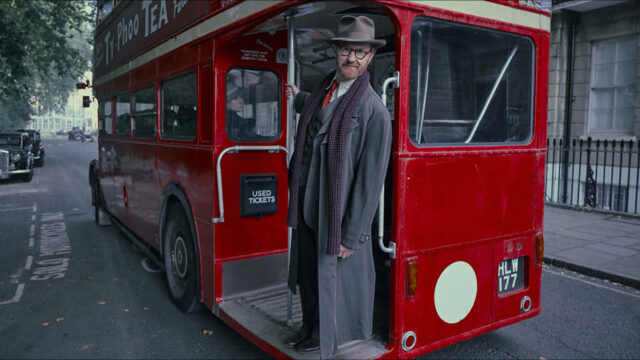
Bookish has played out really well and a second series is in the works. “The reason why we liked it is because it felt different: this period detective in a lavender marriage, and the fact that there’s a huge arc across that series about his gay lover. It was also a passion project for Mark Gatiss. “That was the show he really wanted to make. He wanted to write it, to star in it…When you’ve got talent in front of or behind the camera who love the show they get behind it in a way that is invaluable.”
“The audience loves the beats of the investigation and puzzle-solving, but there are more interesting ways to tell that type of story that doesn’t always have to be police-led.” She references medical investigations, like Malpractice. Or non-police frameworks like Code of Silence.
Bookish
Funding realities and honest conversations
Perry is frank about the challenges of financing scripted TV.
“International funding is tougher than ever, and budgets have inflated. But not everything needs to be five million an episode—absolutely not.”
UKTV’s tariffs sit below streamer, BBC and ITV levels. “From the very beginning when we’re talking to producers about ideas in the back of your head you’re going, ‘is this realistic? Is there a pathway to production?”
She stresses fairness to producers: “There’s no point in sitting across from a producer getting incredibly excited about a show that’s set in space..that’s going to require in its editorial bones a phenomenal budget to pull off.”
Partnerships with companies like BritBox, PBS Masterpiece, S4C and StudioCanal have expanded the financing mix, with recent UKTV dramas being made from £1m to £2m per episode.
Find out more about what the drama commissioners are looking for and the wider picture of demand for UK produced drama in the new issue of Televisual, out now in print, or available via our subscription site Televisual +
Pippa Considine
Share this story