







Subscribe Online  

Blogs&
comment

The art of the budget

Ahead of her Bafta masterclass on line producing this month, film producer Anita Overland explains the often tortuous process of creating a production budget, and sticking to it       

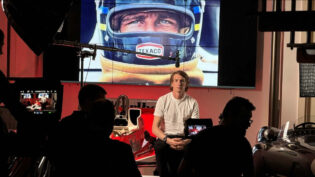
Anita Overland (pictured below on the set of Rush with Ron Howard) began her producing career in promos, moved on to commercials and then went on to big budget movies and high end TV dramas including A Mighty Heart, A Cock and Bull Story, Red Riding, The Young Victoria, The Iron Lady and, most recently, Rush.


When does the budgeting process start?
Early on the producers or financiers will send you a script and ask you to budget and schedule it. There’s usually a number that people are aiming for. The script has a value in the market and that’s down to who’s in it, who’s directing it and what the subject matter is. Quite often the producers or financiers will tell you what they want the budget to be. I listen to what they want the budget to be and then slightly ignore that and budget the cost of the script. That’s because the script usually costs more than what they want to make the film for. You need to tell people what the real cost of their script is first of all and then give them ideas of how they can bring the budget down to the number they want.

What’s the first step?
I don’t like doing a budget without doing a schedule first. You take the script and you enter every scene into a schedule. You push in the cast, the extras, the location, the vehicles, the special effects, the vfx… You put every single detail into the schedule on a scene-by-scene basis then you organise the schedule into a shooting schedule. You then work out an overall production schedule including prep and post. You put in any special requirements. For example, the last project I did was [Formula 1 biopic] Rush and we had to build some replica race cars. You do a schedule for those, which has to happen a lot before prep starts. On Far From the Madding Crowd they needed lambs and they were filming in September so you have to look at mating ewes out of season. There’s a lot of detail. I like to be careful because in six months time you will be held to make the film for that number and you don’t want to be standing on the set and have everyone looking at you saying ‘well, you said it could be done for this amount.’


What if the script cost exceeds the budget they have?
If the script costs $15m and they’ve only got $10m then I give them a list of ways they could get $5m off the script. You do need to be quite strong and stand your ground and say ‘we really need to look at the script and come up with some ways of making some changes.’ It doesn’t need to be destructive.

How do you know what every individual item will cost?
Experience. But there’s always something new in every single film you do. With Rush, I have never had anything to do with Formula 1 cars before so you become a mini expert in lots of different areas. And you call upon your contemporaries a lot. We all call each other a lot and exchange information but sometimes you just have to jump in at the deep end.


What happens when that process ends?
Once you’ve handed them the budget and schedule there tends to be a lot of work over a period of months as this cast member drops out and this cast member is available but only for these shoot dates so you rejig the schedule. Or the director changes or they can’t get as much money as they’d hoped. Then that leads into pre-production when you start to pull the crew together and negotiate salaries. Then the budget becomes a fluid thing. You move money from one area to another to adapt to what actually happens as opposed to what you thought might happen six months ago when you budgeted it.

What about when production starts?
You have weekly costs report meetings with each department that is managing a budget. They report to you and the accountant and then we report to the producers and the financiers. You take people’s word for where they say they are but there’s also a very thorough paperwork trail. It’s strictly managed but it still can go wrong. The big problem mostly is there’s never quite enough money to make the film that everybody wants to make. You’re always trying to keep the vision but not go over budget.

Do you build in a contingency?
You either build contingency into the budget or you have a 10% contingency. If you’re spending that in a controlled way, then people are relaxed. Ideally you don’t spend more than 60% of the contingency during the shoot and keep the remainder for post. If you had less than that then people start involving themselves in the detail of the film a lot more and start questioning decisions and getting rid of people.

What about the post process?
The stresses in post tend to be around the cut. If financiers don’t like it, then there’s talk of pick-ups and reshoots. Other than that though post is a pretty pleasant time. Once you’re in post it’s more relaxed. Unless you’ve run out of money.

The production management masterclass takes place on May 22 at FACT, Liverpool
See http://bafta.ticketsolve.com/shows/873493111/events for details


Posted 15 May 2013 by Jon Creamer

The making of Strange Hill High

New CBBC kids comedy Strange Hill High takes no shortcuts with its mix of puppetry, stop frame, CG, multiple sets and thousands of intricate props. Jon Creamer reports

Strange Hill High  is CBBC’s 13x22-minute animated comedy show led by showrunner Josh Weinstein (Simpsons, Futurama). It combines Japanese toy style vinyl puppets (created by Mackinnon and Saunders) with elements of stop frame animation and cg. Producer Phil Chalk and the show's creator Kat Van Henderson explain the production process.


How complex has the project been?
PC:    The brief was to make 13 half hour episodes. Each one was to be a mini movie in its own right. There haven’t been any taboos – we’ve tackled feast, famine, flood, schools exploding, time travel… We’ve built 35 sets, including the library set that was 16 ft long, 14 ft high with 13,000 books molded into the fabric of it. We’ve made 4000 individual props. We’ve made 60 puppets and a cast comparable to a high-end animated feature. There’s nothing spared in its ambition and scale.
KVH:    Each episode is like its own genre movie so there’s an enormous amount of work. The brief from Josh [Weinstein] the show runner has been let rip. Whatever is brilliant, let’s do that.

Does the mix of techniques add a lot of work?
KVH: It’s a live action shoot with a film crew – a room full of 30 people plus puppeteers but then once that’s done every single frame has cg added to it to create all the characters’ blinks and mouth movements. Then anything that can’t be encompassed in the live action is done in stop frame. It’s literally the worst of all worlds but that’s why it doesn’t look like anything else.


What do puppets bring to the party?
PC: The great thing with shooting live is you can get that extra nuance of performance. If the puppeteers feel they want to create a certain look and feel they’ve got the freedom to do it. That’s very difficult in strict animation when its been storyboarded to the nth degree, frame by frame.
KVH: In animation, if a character was to get knocked over there would be some humour in that but there’s nothing as funny as a physical character getting knocked over. That translates all the way through the show. It’s restricted by using puppets but it’s also incredibly free. You get this really dynamic look.

How much movement do you get from the puppets?
PC: With rod puppets, providing you’ve got the linkages right and the angles right you get quite a degree of freedom. There are five rods per puppet – a central rod stuck up the centre with a gimble joint with a trigger so you can pitch and yaw and rotate the head and then a rod per arm and per foot.


The characters’ mouth movements are made in cg?
PC: The original concept was that we’d just use facial performance recognition software where we can just play the voice track and we’ll get perfect animation curves that will apply to each character and that will be semi automated. How wrong we were. In reality when we key framed it in post we got more believable performances. We thought we could semi automate at least 50% of the post processes but the reality is that’s been no substitute for great animation.

Why use stop frame at all?
KVH: The initial brief was to do everything live in camera but there are some things that are not physically possible live. Rather than resorting to cg, Phil said let’s do them in camera but in another technique. It’s about sticking with what you set out to do, which is to point the camera at something and film it.
PC: In the second season, one of the episodes has a Wereteacher. To create the character’s transformation we’re going to make replacement sections of his arm and physically see all the hairs sprouting from it. So we’ll do that stop frame rather than in cg. We want to keep a symmetry between the live action puppet stuff and the effects, so we’ve kept as much in camera as is physically possible. Though we’ve counted the number of effects shots we’ve done in post so far and there are still 13,000.


What was the thinking behind the character design?
KVH: Really stylised simple shapes. It’s taking the simplistic geometric art of collectible toys and applying it to puppets. On our noticeboard we’ve got a picture of an orange with a Toblerone shoved through the middle. That’s our brief – geometry.

How has the team reacted to working outside of their usual disciplines?
PC: When we started the journey I don’t think any of us knew what we were getting into. We come from a traditional animation background and this is a hybrid between stop frame and live action. It is a live action shoot but with many of the disciplines of animation. On a stop frame shoot you have six individual sets, and the animator will work alone and the director will come and set up shots once or twice a day and then they produce their 11 seconds. But we need 12 people under the set and in terms of setting up each shot we could be looking at two hours per shot and getting 20 seconds maximum on that one set up.
KVH: Everyone has a massive amount of experience but on this everyone is out of their comfort zone. It’s pushed everybody slightly out of their little genre. It’s definitely given the project a real energy.

Production
Co-produced by CBBC, FremantleMedia Kids and Factory Transmedia
Creator Yoshimi & Katoi
Executive producers Bob Higgins, Sander Schwartz, Sarah Muller, Kat Van Henderson
Producer Phil Chalk
Showrunner Josh Weinstein
Voices include Emma Kennedy, Richard Ayoade, Caroline Aherne,
John Thomson
Senior puppeteersVictoria Bovingdon, Michael Brett, Lesa Gillespie, Tim Jones
DoP Martin Kelly
Production designer Andrew Farago
Art director Barbara Biddulph
Character designYoshimi & Katoi
Lead designer Gaz Roberts
Puppets Mackinnon & Saunders
Sets TAKE 1
Head of vfx Gary Noden

Posted 08 May 2013 by Jon Creamer

Commissioning report: Entertainment TV

The big Saturday night entertainment hits return year after year and, although they often show signs 
of ill health, producers have become adept at returning them to match fitness. Jon Creamer reports

Stories that one big Saturday night entertainment format 
or another is finally on the wain are becoming almost 
a standard newspaper think piece. But still those shows return again and again, clawing back the ratings after having been refreshed with a new lick of paint, a few format tweaks 
and the ruthless sacking of a once essential star presenter.

Plus Ça Change...
Fremantle’s Britain’s Got Talent returns to ITV1 this month, 
and though its ratings held well last time out, changes will still be afoot, says its executive producer Richard Holloway. “Every single year we look at it very carefully in terms of what we can do differently the following year. One of the reasons it’s been the success that it’s been is we’ve never once rested on our laurels. We’ve always wanted to make it bigger, better, more interesting, more diverse.”

And it’s that drive in the entertainment genre that’s kept so many big hitting formats coming back year after year. “It’s all about how they are slightly reinvented,” says the BBC controller of entertainment commissioning, Mark Linsey. “Strictly was tailing off about three years ago and people were saying the writing’s on the wall” but with some tweaks “last year was its best ever year.” This month’s launch of the second series of The Voice though will have gone through major changes, keeping the aspects of the show the viewers responded to, and taking an axe to those format points that failed to connect.

The secret is to “make sure you’re constantly refreshing and you’re looking at every aspect of these shows to make sure they’re on their toes, performing the best they can,” says ITV’s director of entertainment and comedy, Elaine Bedell. Not that the refresh has to be fundamental. “For Britain’s Got Talent last year we introduced David Walliams and Alesha Dixon. That gave that series a breath of fresh air and brought a new kind of energy to it,” It’s all about having a light touch. The X Factor lost some of its viewers on its last run out but that doesn’t require a whole scale panic, says Bedell. “It was still averaging nine million viewers last year so there is something in that show that people respond to. You’d be mad to throw the whole thing up and come back with 
a completely different show. What you hope to do is take a broom to it.”


Attention to reinvention
And that’s crucial because the audience has a lot of big entertainment shows to choose from now. “What the audience will not forgive in a highly competitive market is resting on your laurels,” says Bedell. “You can’t take anything for granted. If you expect to get big audiences you have to fight for their attention.”

Producers have learned that constant reinvention, rather than sticking strictly to the format is the key to longevity. “There’s a change in the way formats work,” says Remarkable’s md, David Flynn. “In the past there was a tendency to feel we have to deliver it in exactly the same way year on year as that’s what works.” But the lessons of reality TV have changed all that. “Those lessons have come to other areas now. The audience wants you to surprise them. Where there would be a worry about confusing them in the past, actually there’s a realisation that surprising audiences is all the better. They’re smarter than people sometimes give them credit for.”

And it’s necessary too. Because launching new primetime shows is no easy feat. Due to DQF cuts, the BBC’s Mark Linsey 
is soon to have to take on board a 20% drop in his budget. “When that kicks in it is going to be a big challenge for us in finding creative headroom for new ideas and the opportunities to try new ideas out,” he says. “It’s a hard area to land new ideas and a lot of my money is spent already on very successful brands – The    Apprentice, Top Gear, Strictly, Graham Norton. It’s not as if I’m complaining but the creative headroom is going to be more challenging.”


Risky Business
But even without budget cuts, big entertainment shows are 
a high-risk option for broadcasters and indies alike. It’s also 
a very expensive development prospect. “Entertainment is a difficult genre so some people shy away from it so the pool of ideas and the people out there making it is not as massive as on the factual side,” says Channel 4 head of entertainment, Justin Gorman. “It’s high risk but the rewards can be massive. If you get a Million Pound Drop and it goes to 35 territories then you’re laughing.”

But that’s a tough call for all but the big indie groups with the finances to spend a lot of time and money in development for something that may or may not come off. “It’s a very labour intensive development process so you need to have a resource to fund that,” says Remarkable’s Flynn. “We’ll run through a game show six or seven times before we’ll even show it to a channel. Sometimes we’ll end up not showing it because it doesn’t work.” And even if the commission is landed,  the indie’s then spending, and risking, a large chunk of a channel’s money, a terrifying prospect for a nascent company.

Keep it subtle
Because big entertainment shows are such a major gamble, with failure always an option, they don’t tend to change all that much. Most entertainment shows are a subtle twist on what’s come before, because what’s come before is usually what works. “You can learn new things from either your personal history or the history of what’s been on television for the last 40 years,” says entertainment TV veteran, Holloway.  “That’s not to say one should always be looking at the past but you should consider one’s history and the history of the genre.” The trick is not to jump too far from what audiences are proven to like. “It needs to feel like a traditional Saturday night affair,” says Linsey. The newness can be as subtle as “who’s presenting or the environment you put it in. It doesn’t take much of a twist to make it feel contemporary and fresh. With the chairs on The    Voice there’s a different dimension to a singing talent show. With [upcoming panel show] I Love My Country, it’s a game show with captains and two teams. That’s very traditional and we all get it very easily but what will make it slightly different is the team captains are Micky Flanagan and Frank Skinner who are new to BBC1 Saturday night.”

ITV’s Elaine Bedell, who’s just seen ratings success with Saturday teatime shows Splash and Ant and Dec’s Saturday Night Takeaway, says they are subtly different versions of traditional ideas. “Both those shows felt different and fresh. Even though Takeaway is a revival of a show that used to be on five years ago, the show has come back with a lot of new ideas in it. It feels like old fashioned, almost 1970s entertainment but with a delicious modern twist.” Splash may have been critically savaged, but its audiences grew healthily across its run. And that was, says Bedell, because its swimming pool setting gave it that subtle point of difference. “We’d got away from the shiny floor even though 
it had a lot of shiny floor qualities and values about it. There’s 
not much that’s new in television but what television is brilliant 
at is constantly reinventing itself. That’s what you’re looking for 
all the time – the fresh original takes on shows and 
on the genre and the mixing of genre and all sorts different ways of coming at things. That’s what both those shows have done 
in their way.”

That conservatism also means that quite often new shows are literally reworkings of old shows. ITV is bringing both Surprise Surprise and Catchphrase back this year, keeping the essentials of the formats but refreshing them with various modern tweaks. “Surprise Surprise is obviously built around the personality of the person who’s hosting it,” says Bedell. “Holly Willoughby brought a different style to it, and the content is different as a lot of the elements of Surprise    Surprise exist in other shows now. You have to think of new ideas and news ways of doing it.”

But new shows do punch through, says Remarkable’s Flynn. And, he says, his quiz show Pointless is a case in point. The show has climbed from daytime to primetime while eschewing the high drama, noise and jeopardy that most major entertainment shows of the last decade have relied on. “The event entertainment shows are great but if you can get a kind of club atmosphere and create a warm place the viewer wants to be, they’ll come back time and time again” as long as those shows can grow organically in daytime before facing the fire of primetime. “We’ve been looking at those shows that are absolutely modern in their conception but have that return 
to the traditional, warm, clubby atmosphere that many shows used to have.”

The truth is, great ideas will still find a way through, says Holloway. “I always say to all the development people and producers here, ‘if you have a must-have, really good original idea, broadcasters will buy it straight away.’ There’s no question about it.”


Mark Linsey: BBC controller of entertainment commissioning
Where’s your commissioning focus? Most of our spend is on BBC1 Saturday night. That’s always an area we want to hear ideas on, particularly in peak. We don’t get enough new ideas in that area. And comedy entertainment on BBC3 is something we’re keen to hear new ideas on. People have to be aware of Saturday night across the year. There’s Strictly and Let’s Dance and we’ve got a singing talent show so people should steer away from those areas. We want to be trying new things in peak on Saturday night. We want people to come to us with ideas that challenge us and make us a bit apprehensive. And we have some teatime shows coming down the line like Reflex with Shane Ritchie. We will be thinking in the middle of this year what other teatime shows we should be developing for Saturday night on BBC1. It has to have humour and  purpose – a game that has a beginning, middle and end. The key thing is it’s easy to watch and you can can dip in and out of it. And we want to pilot at least one new Lottery show this year. We will be briefing our needs on that.


Elaine Bedell: ITV director 
of entertainment and comedy
What slots are you looking for ideas for right now?
One slot that we’re returning to entertainment, that used to be an entertainment slot on ITV1 years ago, is Wednesday at 8 o’clock. Since the move of Coronation Street that’s provided us with the opportunity to try new things there. We’re looking for ideas to play there which are heart of the week, heart of the schedule and pre watershed. We’ve done some shiny floor studio shows like All Star Mr and Mrs and we’ve tried factual entertainment but we’re pretty open minded about what could play there. That’s a good place for producers to have a look at and to think quite imaginatively about. It’s an hour long slot and it could be anything as long as it’s in the right price bracket.
What about Saturday night entertainment?
We’re doing well but we have a lot of entertainment on Saturday night. We don’t play any drama on Saturday night, we have one show after another so we need a variety of entertainment shows across our Saturday night schedules. We’re making quite a push in comedy entertainment. On ITV2 we’ve got Juice and we’re looking for more comedy formats to play on the main channel perhaps later on Saturday night. We’re looking at a number of formats to play there. It’s not a sitcom slot. We are making a big push in sitcom elsewhere, but this could be a format for comedians.


Justin Gorman: 
Channel 4 head of entertainment
What’s the tone you’re after?
A lot of what we’re doing is naughty, big and noisy but at its heart it’s quite warm. It’s stuff you want to spend time with not stuff that makes you feel uncomfortable because it’s a bit snidey. There’s a bigger heart in what we do now in entertainment and that’s because it’s what people want. We still get into trouble, look at the Big Fat Quiz. But that is still quite warm. So it’s naughty but not nasty.
What are you looking for right now?
We’re excited about what we could do to kick off the New Year again. We’re always looking for something that can be stripped and make a bit of a splash. We’ve been talking to indies about getting back in the world of reality. The Bank Job was a weird quiz/reality hybrid and that feels interesting for us. Big events are still something were very excited about. Last year we did Stand Up For Cancer. And then shiny floor stuff. Our Friday nights now are great but we want more shiny floor stuff that’s talent led essentially, 
with a light format.

Posted 24 April 2013 by Jon Creamer

Interview: Passion Pictures' John Battsek and Andrew Ruhemann

Fresh from another Oscar win, Passion Pictures' John Battsek and Andrew Ruhemann tell Jon Creamer about their extraordinary run of success in producing feature documentaries

It’s 14 years now since the film arm of animation house Passion Pictures launched its first feature doc, Kevin Macdonald’s One Day in September, that went on 
to win them an Academy Award. Since then, the company’s produced and exec produced a string of movies that have picked up Oscar, Bafta and Grierson nominations and wins from The Age of Stupid, to Restrepo, The Tillman Story and, along with Simon Chinn’s Red Box Films, Project Nim, Raw Films’ Bafta winner The Imposter and this year’s Bafta and Oscar success Searching for Sugar Man.

It’s an incredible hit rate, and all kick started by that first Oscar success. When One Day in September, won the Academy Award “doors flew open left right and centre,” says head of Passion’s film arm, John Battsek. “As a first timer it put us in a position where we could be making big budget feature docs immediately.” 
But even now “people don’t throw money at you...”

Because it’s still about finding the stories and directors that can make it on the big screen. And part of that is the “scale of the story,” says Andrew Ruhemann, head of the Passion Group. “That doesn’t necessarily mean it’s a big multiple cast epic, it’s about the scale of the drama.” It’s also often about finding stories that “fit a feature genre quite well. It’s no surprise with Sugar    Man that there are people hovering around saying they want to make it into a drama. And The Imposter too. They’re films where fact really is stranger than fiction.”

They’re stories that are “greater than the sum of their parts” too, says Battsek. “The story transcends itself and resonates above and beyond the core story.” And that means a film can appeal to a wider audience beyond the one interested in the headline subject.

For the producer, it’s then a case of bringing in elements that can help turn that story into a big screen event. “What kind of archive, what kind of music could you use? Audiences traditionally find archive in feature docs completely captivating,” says Battsek. “We think about how many of those ingredients can we bring to elevate the story to the point it feels like cinema.”

And that’s often where a feature doc sized budget comes in. “Sometimes there’s a film you can elevate because you’ve brought cash to it,” says Battsek. “Money can buy you great music and more archive and you can do all sorts of fancy stuff. Often, though, what the money does is buy people who thought they were going to cut a film in 16 weeks the next 16 weeks they need to actually cut the film.”
Because with docs, it’s not always obvious what the story is from the outset, says Battsek. “You don’t really know until it slaps you in the face and that’s normally week 20 of the edit. These films reveal themselves through the edit, there’s always a question mark over whether it’s going to make it as proper cinema.”

The other element that can turn a story into a cinematic experience is, of course, the skill of the filmmaker. “Bart Layton [The    Imposter], James Marsh [Man on Wire], Kevin MacDonald. They’re very powerful, talented filmmakers and the extra ingredient that helps give it the legs to make it into a piece of cinema,” says Battsek. And those directors come from all angles. “Some have tons of time on TV, some have made movies and want to do docs, some come out of nowhere. It’s one of the exciting things about it.”

Another exciting thing is that there is a decent amount of money around to make theatrical docs now. “It’s pretty healthy,” says Battsek. “Finance and broadcasters have got a real appetite for it.” And there are plenty of people around looking to invest. “We get our films, for the most part, financed quite significantly out of America – HBO, A&E, ShowTime… There are a bunch of people in the business of financing feature docs. A&E and HBO will fully fund a feature doc to the tune of anywhere between $1m and $1.5m, maybe more. And there’s BBC Films, Film4, Channel 4, BBC and there’s Sky now, NBC Universal. There are ways of combining all these people. Then there are all sorts of different little equity companies. Feature docs in the last decade have become something people are very interested in putting their money into."

And they’ve found an established, and burgeoning route to distribution too. “Our traditional pattern is to make a film, platform it at a big festival - more often than not Sundance  - and sell it there,” says Battsek. And that route is getting easier, he says. “Five years ago, you’d probably only sell the US out of Sundance, maybe the UK and maybe Australia too. Now more 
and more international buyers are picking up films 
at Sundance and for proper proper money.”

After that, it’s in the hands of the gods. “We try to make the very best possible film and do the best possible deal and work with the distributor to do the best possible campaign. Then when it’s out there, at a certain point you’ve got to let it happen or not happen.”


Company CV
Starting with Oscar winner One Day In September in 1999, Passion Pictures has been responsible for over 25 theatrical docs including Greg Barker’s Sergio (Oscar shortlisted 2010); Oscar nominated Restrepo; and The Tillman Story (Oscar Shortlisted, 2011). Recently, Passion has been involved with 2013 Bafta Outstanding Debut winner, Bart Layton’s The Imposter, and Malik Bendjelloul’s directorial debut, the Oscar, Sundance and Bafta winning Searching For Sugar Man and the soon to be released Manhunt about the CIA’s long war with Al Qaeda.

Posted 17 April 2013 by Jon Creamer

Staying power: Indie Brit flick Leave to Remain

Director Bruce Goodison wanted to tell the story of parentless young asylum seekers seeking refuge in the UK, and decided drama was the best way to find the truth. Jon Creamer reports

Director Bruce Goodison trained young asylum seekers to star in a fact-based low-budget drama feature that tells the story of parentless teenagers fleeing their home countries and hoping to make a new life in the UK.

Why not make a documentary film on the subject?
There are some subjects you can’t get to via documentary means. I thought it was initially going to be a documentary but that was naïve. It’s a story about child asylum seekers. They’re separated from their families and any legal guardian so you have to be careful not to expose them to any further harm. They may have been trafficked, and who’s to say the trafficker wouldn’t recognise them and come looking for them. It quickly dawned on me I have a huge responsibility not only to tell these stories but also to protect the identities of those telling me their stories.


How was the script developed?
I started doing interviews with around 20 young asylum seekers going back three or four years. From those initial interviews I formed the basis of the script.

Why did you use real teenage asylum seekers in the film rather than professional actors?
It dawned on me that, now I’ve written the script, how am I going to cast it? I’d written it in all the languages spoken by the characters as well as English – Dari, Farsi, Fula – so it was impossible for me to find an established bunch of actors in the UK that can convincingly speak these dialects and look right. And although it’s not these actors’ specific stories, they get it. They know the emotional temperature of every moment. They add colour in the performances with their own experiences.
 

How did you train them?
I set about creating drama workshops. We did ‘three by threes’ where they would think of a story on day one, we’d shoot it on day two and edit it on day three. Within that I would bring in a whole host of professionals I’d known over the years like sound recordists, DoPs and editors to make these films. Then they’d be shown at places like the BFI and the ICA. You could see these young people, who had not been believed by the Home Office and ignored by most people, grow their self-esteem. That level of confidence helps enormously when trying to cast the film.


How did the non-actors take to filming?
We worked on all of the scenes but we didn’t work off the script. It was a matter of encouraging the cast into these scenes we’d written so they understood the emotion of that scene so when it came to working on that scene they weren’t reduced by the scripts. If you get a person who’s never done acting before to say dialogue it’s the worst thing. Whereas if they use their own words, they can do it perfectly.
 

You haven’t gone to the usual places for finance…
Trying to raise money for a low budget film from the BBC and Channel 4 is a big ask. And it’s a drama but its roots are in documentary. But the documentary people wanted interviews in there with real people to make it more like a documentary and the drama people wanted great resolutions but that’s not truthful. So it’s made up of three bits of money; one from the Oak Foundation, a philanthropic organisation who saw this subject has value, then The Paul Hamlyn Foundation and the last pot of money came from a Kazakhstan businessman.
 

What look were you aiming for?
Although it was clearly a real story I think it looks quite beautiful. Myself and DoP Felix Wiedemann were determined we didn’t want to have generators and lots of lights so it’s a naturalistic look. We used the new Alexa as it’s very sensitive to low light situations and it’s a much smaller camera that allowed us to have the quality of a feature film but move like a documentary. I needed as much flexibility in terms of the movement of the actors as we could get, it wasn’t about actors hitting marks and particular lights it was about the right kind of mood. But it hasn’t got a social realistic feel, it has a much more poetic feel. We wanted the beauty of the handheld work you’d find in films like Babel. This is much more in the European traditions of French new wave and the new look of Mexican filmmakers or films like Jacques Audiard’s A Prophet. It has the veracity of a documentary but it looks more sumptuous. There are fantastical elements in this film.


It’s a low budget feature, was it stressful to shoot?
It was complete insanity. It’s an ensemble piece – a large cast and lots of locations and only 23 days to shoot 90 minutes of drama so you’re moving at a pretty fair rate. We did have the rehearsal time so the actors were on it. I never really got further than four takes and this is with a lot of kids on screen at the same time. The crew were magnificent. We worked at a subsistence rate. There were only two tiers of payment, the heads of department and then their assistants and at a fraction of what they’d normally get paid.


details
Leave to Remain is the fictional feature debut from Bruce Goodison, director of factual drama My Murder and the BAFTA winning factual series Our War. It tells the story of a group of teenagers fleeing from traumatic pasts in trouble spots around the world trying to form a life without parents in the UK and hoping the Home Office grants them ‘leave to remain’. It stars Toby Jones but uses actual asylum seeking young people, who were trained in a series of drama workshops, for most of the other main roles.
Director
Bruce Goodison
Producer
Kate Cook, James Levison
1st AD
Phill Reeves
DoP
Felix Wiedemann
Production designer
Chris Richmond
Cast
Toby Jones, Masieh Zarrien, Noof Ousellam, Yasmin Mwanza
Production manager
Cheyenne Conway
Costume designer
Emma Fryer
Make up and hair designer
Natasha Nikolic
Script supervisor
Lola Dauda
Art director
Elliot Scott
Camera
Arri Alexa
Editor
Andrew Hulme
Post house 
Met Film Post

Posted 21 February 2013 by Jon Creamer

The making of BBC1's Africa

For wildlife mega doc, Africa, the BBC NHU filmed across mountain, desert, savanna and jungle. Series producer James Honeyborne tells Jon Creamer about redefining a continent

A David Attenborough fronted BBC blue chip wildlife show focussed on Africa faces certain problems. After all, the continent’s iconic animals are staples of natural history TV. But to leave them out would be impossible.

Though it’s a much more complex picture than that, says series producer James Honeyborne. “People don’t realise how vast Africa is. It’s 7,000km top to bottom and 7,000km across. You could fit the US, China, most of Europe and South America in it. It means there are new things left to say. We very much made it our mission that we would make a series based on new behaviours, new species, new places. ‘Newness’ was going to be our main currency.”


New species was part of that, but the newness also refers to Africa’s best known wildlife. Because, says Honeyborne, Africa’s wildlife stars – lions, giraffes, rhinos – have almost become stereotypes in viewers’ eyes. “Lions are lazy and lie around all day, rhinos are grumpy, solitary and short sighted, giraffes are gentle giants. So we’ve turned things on their heads a bit.”


And that’s been done by bringing in new filming technology and techniques. “In all we took something like 553 cameras into the field, 21 different types of camera, 42 different file formats and we shot over 2,000 hours of raw rushes. [Bristol camera company TShed] developed a new ultra sensitive system that is able to film just with the light of the stars and with a long lens. It’s been a superb bit of kit that’s let us show in intimate details the lives of these animals in what would otherwise be pitch darkness to us.” Rhinos were seen gathering in numbers at night and shown being “surprisingly sociable and having a gentle side for such a notoriously grumpy animal.”


Similarly giraffes, seen as soft and endearing creatures “will use their heads as weapons. They’ll use them like sledge hammers and hammer each other. When you film those sorts of quite eye opening behaviours you begin to realise that even the more familiar animals can be seen in a new light.” The giraffe fights were caught with “a memory cache ultra slow motion camera. For a fight that lasts less than a minute in real time, in ultra slow motion you can see a level a of detail that you couldn’t otherwise see. You can see the shock waves travelling through the flesh as they pound each other.”


The other ambition of the series, says Honeyborne, was “to get out of the 4x4 and meet these animals on their eye line in their world.” And so Africa made a greater use of embedded remote cameras than any previous blue chip NHU special. “For example, there’s a prehistoric looking bird called the Shoebill and we embedded cameras around its nest to film behaviours never seen before.” Reaching that nest took a team on a two-day hike through the Bangweulu swamp dragging canoes full of kit. “All those cameras require a kilometre of cabling, so the new technology doesn’t necessarily make life any easier, but you are able to get a step change in terms of the intimacy.”


Time lapse was employed too. The shifting seasons’ impact on the landscape caught on time lapse to great effect on Frozen Planet was brought to bear on Africa’s deserts. “In Tunisia we wanted to film the sea of sand and how the dunes moved. When you’re there they seem very stable but they move like waves over time. We’ve never really been able to see that before but we filmed a whole landscape’s movement in one of the biggest time lapses ever attempted.


The time lapse cameras (Nikon D3s, Canon 50D), encased in purpose built dust defying housings were mounted on to metal poles that were themselves mounted in concrete and left in the Tunisian desert for 20 months. Political events also meant the cameras had to be robust and able to keep shooting without much intervention. “We set them all up just before the Arab spring uprisings and there was a period when we couldn’t get into Tunisia but our cameras were still clicking away.”

For Africa, the vast majority of the series was shot on solid state (and because of the diversity of the teams out shooting, 42 different file formats). “The vast majority of this was shot solid state directly onto memory sticks. Our raw footage occupied something like 100 terabytes of storage. It’s always scary having your rushes on something so intangible but we mirror drive everything and it’s a very plausible way of moving things. It used to be pretty scary coming back with exposed film and having to go through some X ray machine. At least now you can split drives and mirror drives between people to make sure we’ve got that level of back up.”


However the tech moves on, “the technology is always in service of the story. Our aim is to demonstrate the breadth of what happens in nature. And that means a wide range of techniques and technologies are required.”


details
- In total, the raw footage occupied 100 terabytes of storage space.
- Over 2,000 hours of raw rushes filmed
- 553 cameras deployed throughout the series in total
- 42 different file formats
- 21 types of camera including the Panasonic HPX2700, Phantom, Canon XF305, Canon XF105, Cineflex, High Speed Memrecam, Starlight camera, remote Camballs,  Bradley cameras, Canon 5D, Steadicam, Red Epic, Silicon Imaging 2k, GoPro, Sony EX3, Sony 750...to name a few
- Eight cameras harmed. One chargrilled, two eaten (by a lion and an elephant), two mini-helicam crashes and three drowned
- Over 1km of remote camera cabling to film nesting shoebills at Bangweulu Swamp
- Four years in production
- 6,526 anti-malarial tablets
- 1,840 hours in hides
- 1,598 days on location
- 601 nights spent in tents
- 79 separate filming expeditions
- 27 countries visited
- Just under 50 tonnes of kit carried by crew
- 111,888 4x4 miles
- 100 days spent on horseback
- 905 hours spent trekking in the jungle

Posted 03 January 2013 by Jon Creamer

The Snowman and The Snowdog: Behind the scenes

‘Classic’ is a word often bandied about in TV, but The Snowman surely earns it. So creating a sequel on its 30-year anniversary was both a privilege and a daunting task. Jon Creamer reports 

The screening on Channel 4 of The Snowman, the animated version of Raymond Briggs picture book, is as much a part of British Christmas telly as the Queen’s Speech and the Bond film.

Raymond Briggs’ story of a little boy who flies across the world with his Snowman friend first aired on Channel 4 when the broadcaster was born 30 years ago. And almost ever since, the film’s producer, John Coates had tried to convince Briggs to agree to a sequel. Briggs had always said no, the Snowman melts at the end of the story and that’s that.


But with the 30-year anniversary approaching, Briggs’ opposition also began to melt. Coates [who sadly died earlier this year], along with Lupus Films’ Ruth Fielding and Camilla Deakin, now had Hilary Audus and Joanna Harrison on board as director/writers, two of the original film’s animation team. An initial pitch to the newly ensconced Channel 4 chief creative officer Jay Hunt also came back with an immediate ‘yes please’ followed by a swift commission when the script was completed and Briggs’ blessing too.


The commissioning process may have been smooth but, says Fielding, “There’s a lot of expectation and weight on our shoulders.” There’s a ready-made audience, but it’s an audience that’s very protective over the film. “You know when you’re making it it’s got to be so good,” says Deakin. “It’s made with the same care and attention and love and devotion by a lot of the same artists as the first film. I don’t feel any doubt that people will fall in love with it.”

The sequel’s balancing act has been to keep as close to the original as possible while changing it enough for today’s kids brought up on a faster paced animation style. “We wanted to make the film look like the original but mean more to audiences today,” says Fielding. “We wanted the production technique to look like Raymond’s original drawings but to have the vibrancy and depth that audiences expect from a Pixar movie.”


And the need to keep to that Raymond Briggs illustration style also meant keeping the animation techniques as close as possible to those used 30 years ago. “The original was made on cell but you can’t get enough cell to make any thing longer than an advert now,” says Fielding. “So we decided to animate with Caran d’Ache pencils on to paper.”  But hand rendering with pencil is a technique almost never done now, and certainly not for a film as long as The Snowman and the Snowdog. So the production needed to find animators with experience of the process. “We managed to get eight people who’d worked on the original to work on this one,” says Fielding. “Layout artists, storyboard artists, animators.” Some of the animators “literally hadn’t worked in this way in years and were doing book illustration or gardening or window cleaning,” says Deakin. The production also had to train young matte artists and renderers. “People don’t do hand rendering in pencil now,” says Fielding. “People thought we were mad. They said ‘surely you can create that texture in Photoshop and then put it into After Effects?’ But you can’t, you don’t get that beautiful ‘boil’.”

There were initial tests to try to get the Snowman look but with modern methods. But software packages prefer clearly outlined elements and couldn’t cope with the hazier, pencil drawn outline of the Snowman characters. “We tried various plugins. Some software manufacturers even offered to design plugins for us but it just didn’t look the same,” says Fielding. “And we thought ‘we either need five After Effects animators or eight hand drawn renderers, so let’s get them out of retirement.”


The decision was also taken to keep a British classic in British hands. Rendering was entirely completed by a team working out of Lupus’s Islington studio, and that helped the film creatively, says Deakin: “For everyone in the studio, the original film means something. If we’d shipped all the animation off to the Far East, the people animating it wouldn’t know what the characters meant. You feel the love in this film. That does come through.”

But while the sequel strived to retain the warmth of the original, it still had to reflect the fact that 30 years have passed, and kids reared on Pixar and DreamWorks movies expect more pace. Animator Robin Shaw, who directed the Snowman pastiche Irn Bru ad, was brought in as he’d perfected the art of creating moving, spinning, more dynamic backgrounds in pencil rendered animation. There’s also greater emphasis on action, with a downhill race involving the world’s snowmen and plenty of slapstick. There are even a few bits of cg (covered over with pencil of course), used to create vehicles in the film, which also give proceedings more pace. “What you don’t want to do with a sequel is go too far away so it doesn’t feel like the same family,” says Deakin. “Every element has be new and fresh and a surprise. But at the same time it has to reference the original so it feels like two parts of a whole.”


details
The Snowman and the Snowdog is the sequel to perennial Christmas favourite, The Snowman, produced 30 years ago at the birth of Channel 4 from the Raymond Briggs picture book. The sequel moves the story on thirty years with a new boy in the old house who builds a snowman and a snowdog to replace his pet that’s recently died
TX Christmas 2012
Production A Snowman Enterprises and Lupus Films production for Channel 4
Commissioned byJay Hunt
Written and directed by Hilary Audus
Written and art directed by Joanna Harrison
Assistant director Robin Shaw
Music by Andy Burrows and Ilan Eshkeri
Storyboard, layout and lead animation Richard Fawdry, Roger Mainwood, Paul Stone, Pete Western
Head of Rendering Jill Brooks
Compositing/vfx supervisor Tim Marchant
Producers John Coates, Camilla Deakin, Ruth Fielding

Posted 07 December 2012 by Jon Creamer

Things that go bump in the night

This Halloween, BBC1 will screen three-part haunted house drama The Secret of Crickley Hall. Writer/director Joe Ahearne tells Jon Creamer how he’ll make viewers jump out of their skins

In many ways, James Herbert’s The Secret of Crickley Hall is a classically structured haunted house story. A traumatised family decamp to a remote holiday house only to find the house’s horrific history lives on.

And so in many ways the adaptation was an uncomplicated process, says writer/director Joe Ahearne. “It’s fairly straightforward and linear – a family go to a house, the house is haunted and we find out why it’s haunted and scary things happen.” But beyond that, there were more complications, he says. “Horror’s a difficult proposition, particularly on BBC1. You’ve got to be accessible as well as terrifying. That balance is always difficult to judge.”


The adaptation also needed to push the book’s narrative further. The original idea was for a one-off 90-minute film, but during development that was extended to three one-hour episodes. That meant that, unlike the book, which just has occasional flashbacks to the house in question’s horrific past as an orphanage run by a sadistic owner in 1943, “we spent much more time in 1943 than the book does,” says Ahearne. “In the TV version it’s much more like a parallel narrative, like The Godfather 2, where you’re following two stories.”

The house itself took about a year to find. “It’s a house that the father brings his family to to escape the one year anniversary of a traumatic event, so that means it can’t look like some terrifying gothic place” as that would stretch credulity too far. “But at the same time it can’t be boring. It’s also got to be in the middle of nowhere, it’s got to be somewhere that could flood and it’s got to be somewhere that could have existed in 1943.” A house was eventually found in the Peak District and “luckily it was owned by a builder. He’s about the only owner that would have allowed us to do what we did.”

The parallel narrative meant the team would effectively have to make both a period 1940s drama along with a contemporary drama. And “they’re both set in the same house, so you have quite a lot of logistical issues about which you film first,” says Ahearne. “It would have been easier if we’d shot all the contemporary stuff first and then the period stuff later” to give the costume designers and production designers time to create the period reality. Instead, the decision was taken to do the reverse. “We felt that it was better to have the 1943 stuff in our heads when we shot [the contemporary scenes]. It’s nice to know exactly what the people who become ghosts did before you film the contemporary characters – useful for “echo shots” and camera moves as the two ‘films’ have to interact so “you can choreograph it in a certain way.”


Deciding how to shoot the 1943 parts and the contemporary parts was also a key decision. “The most obvious decision would be to treat 1943 differently. To put some smoke or atmosphere in or light it differently.” Instead, the decision was taken to treat 1943 exactly the same as the present day shots.  “They’re not flashbacks,” says Ahearne. “The past is happening in the present. We didn’t want it to be emotionally ‘over there.’ So although we did a lot of work [on the period setting] – we put walls in, we pulled staircases out, we changed the house inside and out and we did a lot of cgi – we didn’t do anything that said that’s over there and this is here.” The transition between the real world and the ghost’s world was done “in the editing rather than with huge stylistic statements that bang the audience over the head.”


The other great test of course was to keep delivering scary moments in such a well-trodden genre where audiences are so primed for shocks. “It’s a really good challenge,” says Ahearne. “If you’re a fan of horror, which I am, you’re going to want to do similar things [that you’ve seen before] but you want to give them a new twist.” One of the hardest things to do now, says Ahearne “is to make an audience jump. But there are half a dozen places in the story where people will really jump. It’s just a question of craft. Unless you’re doing a highly experimental movie you are not going to come up with something that no one could possibly imagine. You are trying to do your best to take the elements and see if you can configure them in a way that’s fresh.”

details
The Secret of Crickley Hall is a three-part BBC1 drama that will TX around Halloween. It’s made by BBC Drama Production North adapted from the James Herbert novel of the same name. It tells the story of a family grieving for their missing child who head to a country retreat to forget, only to find that the house’s past incarnation as a 1940s orphanage run by a cruel sadist has never really disappeared
Cast
Suranne Jones, Tom Ellis, Douglas Henshall, David Warner, Sarah Smart, Iain De Caestecker, Olivia Cooke
Producer
Ann Harrison-Baxter
Writer/director
Joe Ahearne
Composer
Dan Jones
Editor Graham Walker
Production Designer
David Butterworth
DoP
Peter Greenhalgh
Head of production
Susy Liddell
Script editor
Simon Judd
First AD
Claire McCourt
Second AD
Simon Dale
Third AD
Matthew Jennings
Exec producer
Hilary Martin
Cameras 
Arri Alexa
Post house
Deluxe 142
Vfx
Rushes
Vfx supervisor
Chris Mortimer

Posted 24 October 2012 by Jon Creamer
Showing 1 - 8 Records Of 59
 

About this Author

  • Deputy Editor Of Televisual
     
  • Total Posts: 59

Recent Posts by This Author

Archives

Subscribe


Televisual Media UK Ltd 48 Charlotte Street London W1T 2NS Tel +44 (0)20 3008 5750 Fax +44 (0)20 3008 5784
©2009 - 2013 Televisual. All rights reserved
Use of this website signifies your agreement to the Terms of Use | Disclaimer